A year ago, the question about AI in medicine was whether physicians would use it.
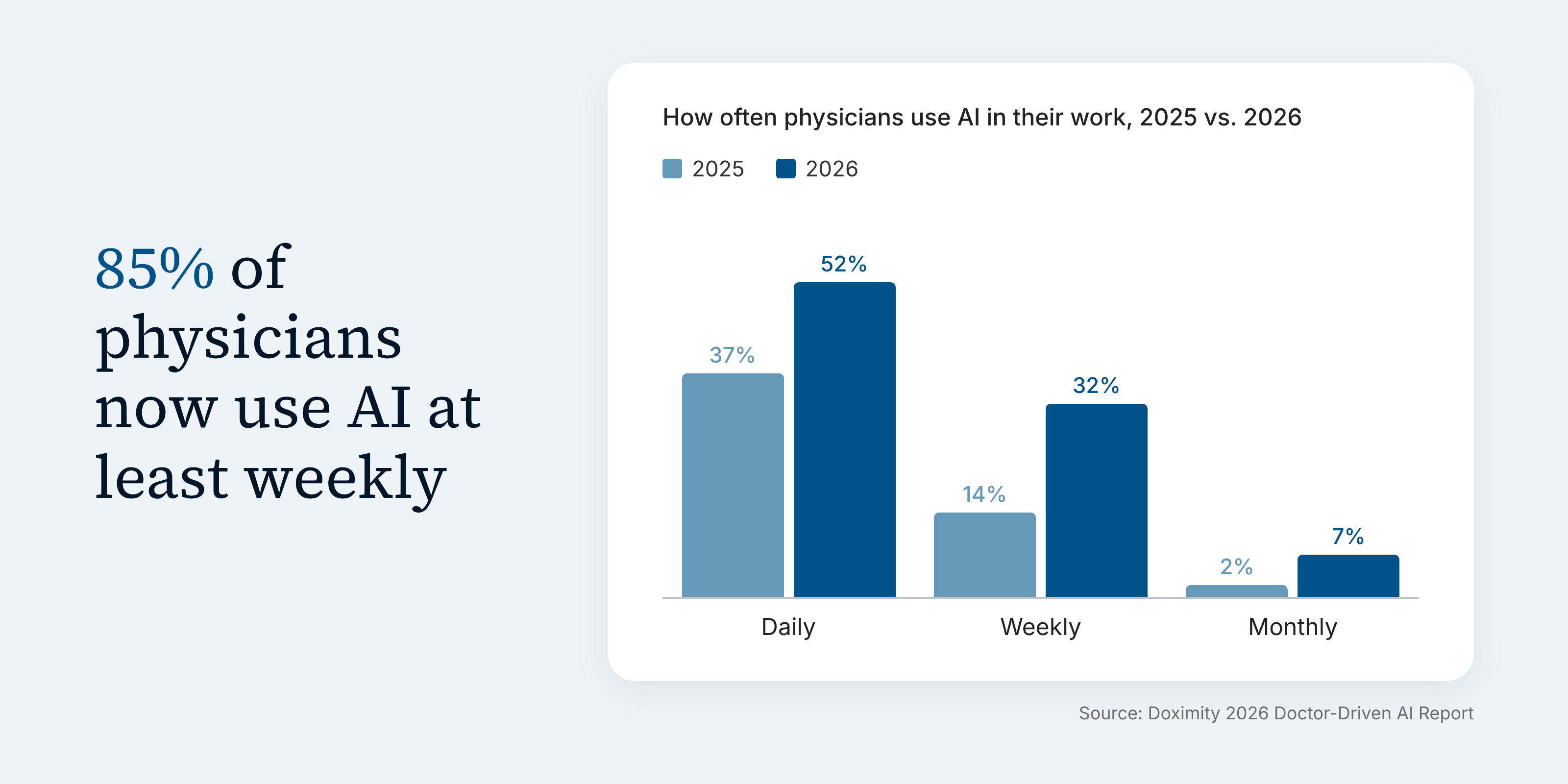
That question has been answered. In our 2026 Doctor-Driven AI Report, 85% of physicians say they use AI for work at least weekly, and 52% use it every day. In 2025, those numbers were 51% and 37%. And 83% say their professional use of AI has increased over the past year.
The more interesting questions now are what AI is changing about the practice of medicine, and who gets to decide where it goes. Here is what 3,379 physicians across 20 specialties told us.
Adoption is broad, not niche
The jump wasn't driven by one group of early adopters. Weekly AI use rose by at least 34 percentage points in every age group we studied. More than 90% of physicians 30 and under use AI weekly, and so do 66% of physicians in their 70s.
The same is true across specialties. Weekly use topped 80% in most of the 20 specialties surveyed. Oncologists led the field, with more than 93% using AI weekly and 65% using it daily. Even in the two specialties with the lowest rates, pathology and anesthesiology, about 70% use it weekly.
AI is moving into clinical work
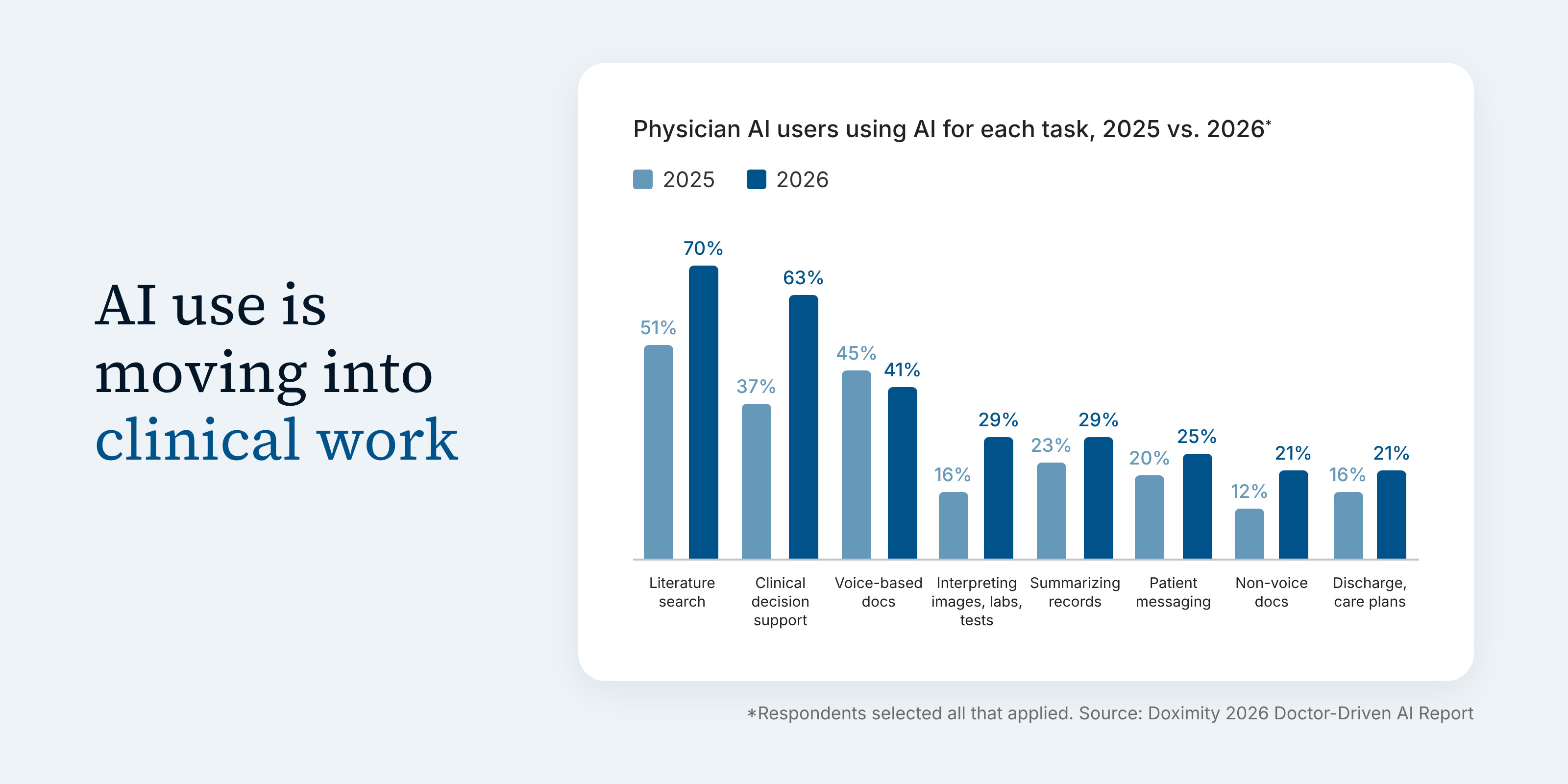
Two-thirds of physicians now use AI for a task they used to do themselves. The biggest growth is clinical, not administrative:
- Literature search: 70% of physician AI users, up from 51%
- Clinical decision support: 63%, up from 37%
- Interpreting images, labs, or diagnostic tests: nearly doubled year over year
Administrative and writing tasks remain common too, led by professional correspondence (38%), patient education (34%), and insurance letters (32%).
Physicians are getting time and knowledge back
Nearly every physician we surveyed spends some time on after-hours administrative work, and 26% spend more than six hours a week on it. This year, 46% of physicians say AI has already reduced that "pajama time." In 2025, 36% of physician AI users said the same.
Many expect more. About 41% of oncologists and 38% of general surgeons estimate AI could save them more than six hours of after-hours work per week.
The less expected finding is about learning. 81% of physicians say AI has taught them something clinically they didn't already know, such as an updated guideline, an alternative diagnosis, or a treatment option they hadn't considered. 22% say this happens frequently.
"I spend less of my day on admin tasks and more on the patient in front of me. I still verify each output myself, but it's much easier to be an editor than an author at the end of a busy clinic day."
- Clark Williamson, MD, MPH, Internal Medicine
Trust is high. So is verification.
Physicians trust AI for a wide range of tasks: 94% trust it at least somewhat for literature search, 87% for differential diagnoses, and 86% for treatment recommendations.
That trust is not blind. More than half name accuracy and reliability as a top concern. Three in four have encountered a factual inaccuracy in AI output at work in the past year. And two-thirds independently verify AI-generated clinical information all or almost all of the time.
Physicians also see risk for the next generation. 61% are concerned about AI's effect on skills development among the residents and trainees they supervise. Concern about skill erosion is highest among physicians 30 and under, at 43%.
This combination of enthusiasm and skepticism is exactly what medicine should want from its early adopters.
Patients are bringing AI into the exam room
About three in four physicians say patients have become more likely in the past six months to propose a self-diagnosis or treatment plan from a generative AI tool. 30% say that increase has been dramatic.
The effect cuts both ways. A third of physicians say patients now arrive better informed than they did with "Dr. Google." But 27% say AI has made patients more confident in wrong conclusions, and 9% say the most concerning AI self-diagnosis they've seen would have posed real clinical risk if acted on.
The rules haven't caught up
81% of physicians say AI use is permitted or supported at their organization. Only 28% say there are clear policies and approvals in place. That gap varies by setting: 53% of physicians at government hospitals and clinics report clear guidelines, compared with 14% in private practice.
The gap has a cost. 34% of physicians say legal and regulatory uncertainty is one of the biggest limits on their use of AI.
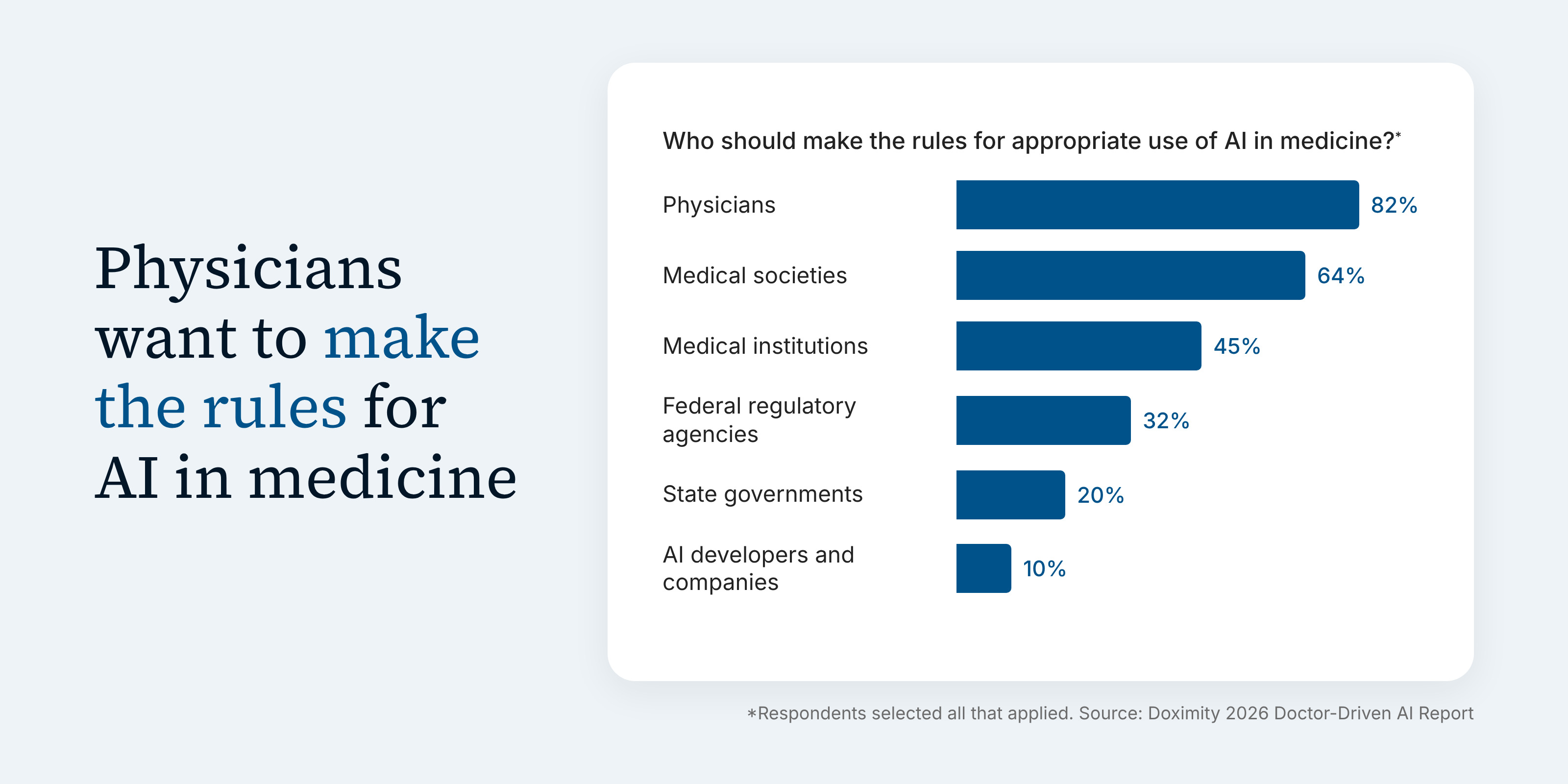
So who should set the rules? Physicians were clear. 82% said physicians should, followed by medical societies (64%). Far fewer pointed to federal agencies (32%), state governments (20%), or AI companies (10%).
What comes next
AI is already part of how medicine is practiced. The work ahead is making sure it is accurate, that trainees still build the skills they need, and that institutions give physicians clear guidance.
At Doximity, we build our AI tools around what physicians tell us they need, and accuracy sits at the top of that list. That's why Doximity Ask cites the medical literature behind its answers, and why we recently launched DoseCheck, a free safety feature in Ask that checks AI-generated medication dosing recommendations against FDA labeling and professional guidelines.
But the most important finding in this report isn't about any one tool. Physicians are using AI, checking it, and asking for a seat at the table. The next chapter of healthcare AI should be written with them.